
Planning transportation for a European group is more complicated than simply counting passengers and booking a vehicle.
A successful group transportation plan needs to account for passenger numbers, luggage, vehicle capacity, hotel access, airport procedures, traffic, sightseeing schedules, intercity travel, driver requirements and local operating conditions.
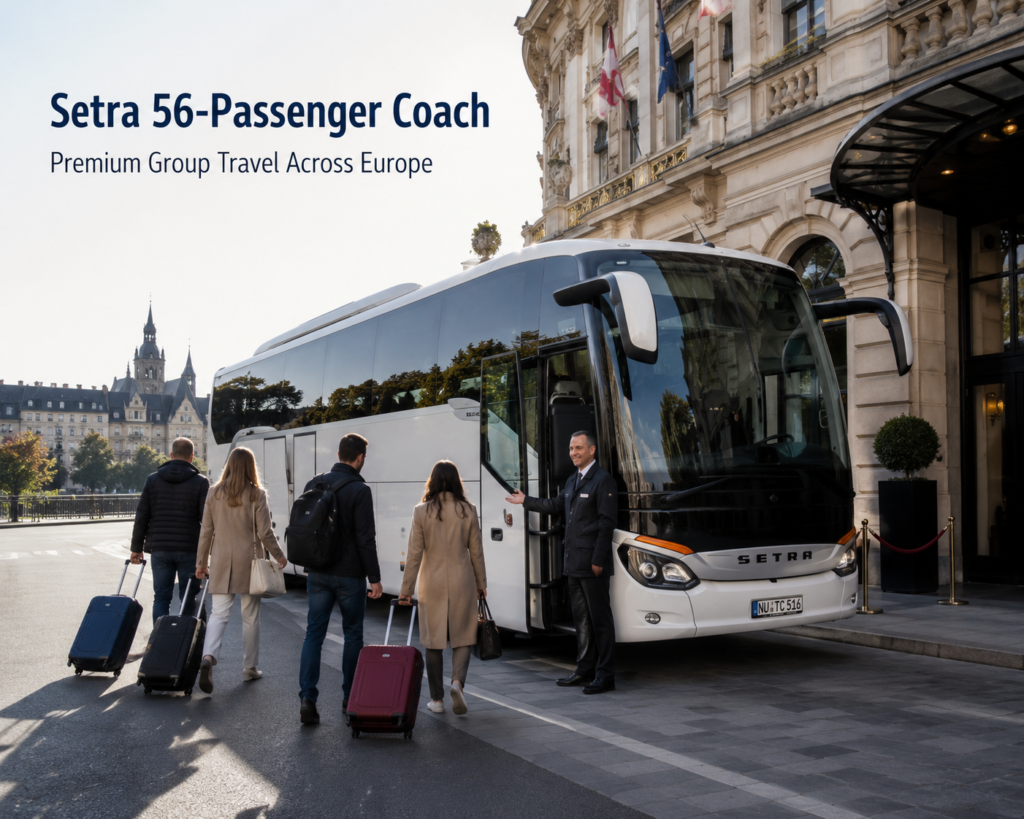
This becomes even more important when an itinerary covers several cities or countries.
For travel agents, tour operators, DMCs and group planners, many transportation problems can be avoided before the journey begins. The key is to provide the right information early and build the transportation plan around the actual itinerary rather than treating every transfer as an isolated booking.
Here are the most important mistakes to avoid when planning group transport in Europe.
The biggest group transportation mistakes
The most common planning mistakes include choosing a vehicle based only on passenger numbers, underestimating luggage, providing incomplete pickup information, creating unrealistic schedules, ignoring hotel or city access restrictions, booking too late and failing to build a contingency plan.
For multi-city journeys, planners also need to consider applicable driving and rest requirements. EU rules apply to buses and coaches with at least 10 seats, including the driver, although specific exceptions and conditions apply.
The following mistakes are therefore worth checking before confirming a European group itinerary.
1. Choosing a vehicle based only on passenger count
One of the most common mistakes is assuming that the number of seats automatically determines the right vehicle.
For example, a group of 18 passengers may technically fit within a vehicle with 19 passenger seats. But that does not automatically mean the vehicle is appropriate if the group is carrying substantial suitcases, equipment or other baggage.
Vehicle selection should consider:
- Number of passengers
- Number and type of bags
- Trip duration
- Distance between destinations
- Number of daily movements
- Required comfort level
- Accessibility requirements
- Available loading space
For smaller groups, a sedan or premium van may be appropriate. Larger groups may require a Sprinter or touring coach depending on the itinerary and luggage requirements.
The important point is to match the vehicle to the complete transportation requirement, not just the headcount.
2. Forgetting to include luggage requirements
Passenger numbers tell only part of the story.
A group travelling for one day may have significantly different luggage requirements from a group travelling through Europe for two weeks.
Before requesting transportation, provide an estimate of:
- Large suitcases
- Cabin bags
- Sports equipment
- Golf bags
- Musical instruments
- Wheelchairs or mobility equipment
- Other oversized items
This information can affect vehicle selection and luggage arrangements.
A useful rule for planners is simple: if the luggage could affect the vehicle, mention it before the quotation is finalized.
3. Sending an incomplete itinerary
A transportation provider cannot properly plan a multi-city journey from only a list of cities.
A complete request should ideally include:
- Travel dates
- Passenger numbers
- Arrival and departure details
- Airport terminals
- Hotel names and addresses
- Pickup and drop-off locations
- Sightseeing stops
- Intercity routes
- Event or meeting schedules
- Required waiting time
- Luggage information
- Special requirements
This is particularly important for European itineraries involving several countries.
Tour Passion’s existing guidance for European coach transportation similarly recommends clarifying who is travelling, where they are going, when they are travelling, luggage requirements and how many days transportation is required before matching the requirement to a vehicle and operating plan.
4. Giving vague pickup and drop-off information

“Pickup at the hotel” sounds straightforward, but it may not be enough.
Large hotels can have multiple entrances, loading areas or restrictions on where coaches can stop. A city-centre property may also have limited access for larger vehicles.
For airport transfers, the transportation brief should include the airport, terminal where relevant, flight information and preferred meeting arrangement.
For hotels and venues, provide the exact address and any known access instructions.
This gives the operator an opportunity to identify potential access or stopping issues before the day of travel.
5. Building an itinerary with no time buffer
A group itinerary should not assume that every movement will happen exactly according to the theoretical driving time.
Groups need time to:
- Collect luggage
- Assemble at the meeting point
- Load bags
- Board the vehicle
- Handle hotel check-out
- Stop for meals or comfort breaks
- Deal with traffic
- Reach venues and parking areas
Airport transfers deserve particular attention because baggage collection and passenger assembly can add time before the vehicle can actually depart.
The same principle applies to sightseeing.
If a group is scheduled to leave one attraction at 15:00 and arrive at a restaurant at 15:30, the plan needs to consider actual traffic, boarding time and access — not just the estimated road journey.
6. Booking group transportation too late
Large group movements require more coordination than individual transfers.
Leaving transportation until the final stage of itinerary planning can make it harder to find the preferred vehicle category, coordinate multiple cities or accommodate complex schedules.
This is particularly relevant during:
- Summer travel
- Christmas and New Year periods
- Major events
- Trade fairs
- Conferences
- School and university travel periods
- Large MICE programs
Early planning does not mean every detail must be perfect from day one. It means that the core requirement — dates, group size, destinations and transportation scope — should be discussed early enough to identify potential operational issues.
7. Ignoring hotel, venue and city access
A vehicle that works perfectly on a motorway may not be practical at a particular city-centre hotel.
European destinations can have different arrangements for coach access, loading, parking and restricted areas. These conditions can also vary between locations within the same city.
This is why a multi-city itinerary should be reviewed location by location.
For each major stop, planners should ask:
- Can the vehicle reach the hotel?
- Where can passengers board or leave the vehicle?
- Is there a designated coach loading area?
- Is parking required?
- How far is the vehicle from the entrance?
- Are there local restrictions that need to be considered?
Do not assume that because a vehicle can reach one European city centre, it can operate in exactly the same way in another.
8. Ignoring driver driving and rest requirements
Another important mistake is building an itinerary around passenger preferences without considering the operating requirements of the driver and vehicle.
EU driving-time and rest rules apply to buses and coaches with at least 10 seats including the driver, subject to specific rules and exceptions.
The European Commission’s guidance also sets out rules concerning driving periods, breaks and daily and weekly rest.
For a long multi-day coach journey, this means the transportation plan should be reviewed operationally rather than assuming one driver can simply remain available for every movement throughout the itinerary.
The best approach is to discuss the complete itinerary with the transportation provider so that the proposed schedule can be checked against applicable requirements.
9. Forgetting accessibility and special requirements
Accessibility should be discussed before vehicle assignment, not after the vehicle has been selected.
Ask the group in advance about requirements such as:
- Wheelchair use
- Reduced mobility
- Step-free boarding
- Assistance requirements
- Extra luggage or mobility equipment
- Child seats where applicable
- Special medical or equipment requirements
EU passenger-rights legislation includes protections concerning accessibility and passengers with reduced mobility, although the exact rules depend on the type of service and journey.
For private group transportation, the practical priority is to communicate requirements clearly and early so the operator can determine an appropriate solution.
10. Treating every transfer as a separate booking
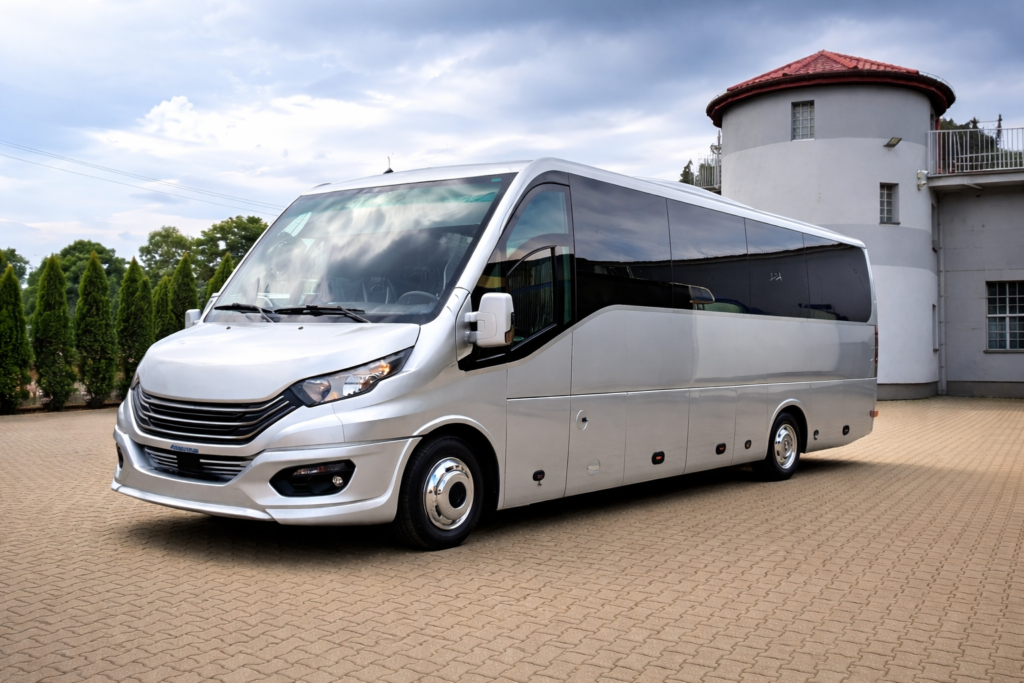
This can become a major problem on multi-city European itineraries.
Imagine a group travelling:
Paris → Brussels → Amsterdam → Cologne → Frankfurt
If each movement is planned independently, important information can be lost between bookings.
A better approach is to provide the entire transportation schedule where possible.
This allows the transportation provider to understand:
- The group’s overall movement
- Vehicle requirements
- Different city access conditions
- Intercity distances
- Airport movements
- Hotel changes
- Driver requirements
- Timing between activities
Multi-city transportation should therefore be treated as one connected operational plan, even when individual transfers occur on different days.
11. Assuming the vehicle category without reconfirming the details
A quotation may describe a vehicle category, but planners should still confirm the important operational details before the journey.
The final confirmation should ideally cover:
- Passenger count
- Vehicle category
- Luggage requirements
- Pickup location
- Drop-off location
- Date and time
- Driver or coordination details
- Flight information where relevant
- Special requirements
- Any agreed waiting or sightseeing arrangements
Vehicle availability can depend on the destination, date, group size and itinerary, so the exact vehicle should be confirmed rather than assumed.
12. Having no contingency or communication plan
Even a well-planned itinerary can encounter unexpected issues.
Flights can be delayed. Traffic conditions can change. A hotel may alter its access arrangements. A group may take longer to assemble.
For this reason, the transportation plan should identify who is responsible for communication when something changes.
For professional group movements, establish:
- Main group contact
- Transportation contact
- Emergency contact
- Flight monitoring requirements
- Meeting-point instructions
- Escalation procedure
- Updated itinerary documents
A clear communication structure can prevent a small delay from becoming a larger operational problem.
A practical group transport checklist for Europe
Before confirming European group transportation, use this checklist:
| Planning Item | What to Confirm |
|---|---|
| Group size | Final passenger count |
| Luggage | Number, size and special equipment |
| Vehicle | Appropriate capacity and configuration |
| Dates | Exact operating dates |
| Timing | Pickup, drop-off and activity times |
| Airports | Airport, terminal and flight details |
| Hotels | Exact property and address |
| Venues | Access and loading arrangements |
| Itinerary | All cities and major movements |
| Driver requirements | Applicable driving and rest requirements |
| Accessibility | Mobility and special requirements |
| Communication | Main contact and emergency procedure |
| Contingency | Buffer time and disruption plan |
| Final confirmation | Vehicle and itinerary reconfirmed |
What travel agents and tour operators should include in a transportation request
A detailed transportation request can make the planning process considerably easier.
Instead of sending:
“20 passengers need transportation in Europe for five days.”
provide something closer to:
20 passengers + luggage, 10–15 June, Paris–Brussels–Amsterdam, airport arrival details, hotel addresses, sightseeing movements, preferred vehicle category and any accessibility requirements.
The second request gives a transportation provider enough context to assess the actual requirement.
For B2B travel professionals, this is especially useful when transportation forms part of a larger package involving hotels, sightseeing, guides, restaurants, events and multiple destinations.
How Tour Passion can support European group transportation
Tour Passion combines European DMC services with private transportation planning for groups travelling across European destinations.
Depending on the requirement, transportation can include chauffeur-driven vehicles, Mercedes V-Class vehicles, Sprinter configurations and larger coaches for bigger groups.
The appropriate solution depends on the group size, luggage, dates, destinations, itinerary and operational requirements.
For travel agents, tour operators, DMCs and MICE planners, providing the complete itinerary at the quotation stage allows the transportation requirement to be assessed as a complete journey rather than as a collection of disconnected transfers.
Tour Passion also supports multi-city European transportation planning, airport and hotel movements, sightseeing transportation and group travel logistics.
The biggest transportation problems on European group tours are often caused by planning gaps rather than the vehicle itself.
Choosing a vehicle only by passenger count, forgetting luggage, providing incomplete pickup information, leaving no time buffers, overlooking hotel access and ignoring applicable driver requirements can all create avoidable complications.
The solution is to treat transportation as part of the itinerary from the beginning.
Give the transportation provider the complete passenger, luggage, itinerary, timing, hotel, airport and special-requirement information, then confirm the operational details before the journey.
For complex European group travel, good transportation planning is not simply about getting passengers from one address to another. It is about making sure the vehicle, schedule, locations and operational requirements work together.
Suggested For You
Multi-Country Europe Tour Package – 11 Days
Switzerland France Tour Package – 12 Days
Luxury Transfer Services in Europe
Recommended Europe Travel Services
Paris coach hire ,
Paris chauffeur service ,
Schiphol airport transfers ,
Amsterdam airport taxi ,
Paris airport transfer ,
Europe coach rental ,
Barcelona airport transfers